An asteroid was going to hit Earth, and we had five hours to figure out how anyone could possibly see it happen. In the end, it came down to a photographer in Broome, a Facebook message, and a single frame that almost got dismissed as noise.
by: Hadrien Devillepoix
The Scramble
Sunday September 6th, afternoon in Perth, Father’s Day in Australia. My phone goes off: ESA’s Meerkat system has flagged an impact. Message from Paco Ocaña at ESA’s NEOCC: CERNQ52, a small object first picked up under that provisional tracklet designation, is coming in. Right now it’s out over the Pacific, somewhere near Hawaii, weather’s bad there so no one’s got eyes on it. But this time there’s good follow-up. Catalina Sky Survey has done it again, and the impact scenario firms up fast: this one is confirmed.
We have five hours.
So, what do you do with five hours and an asteroid that’s well over the ocean?
I look up flights that could get us up to South-East Asia in time to intercept it. Can’t book any of them. A small plane would get us there eventually, just not before the asteroid does.
To complicate things further, most of the region is cloudy.
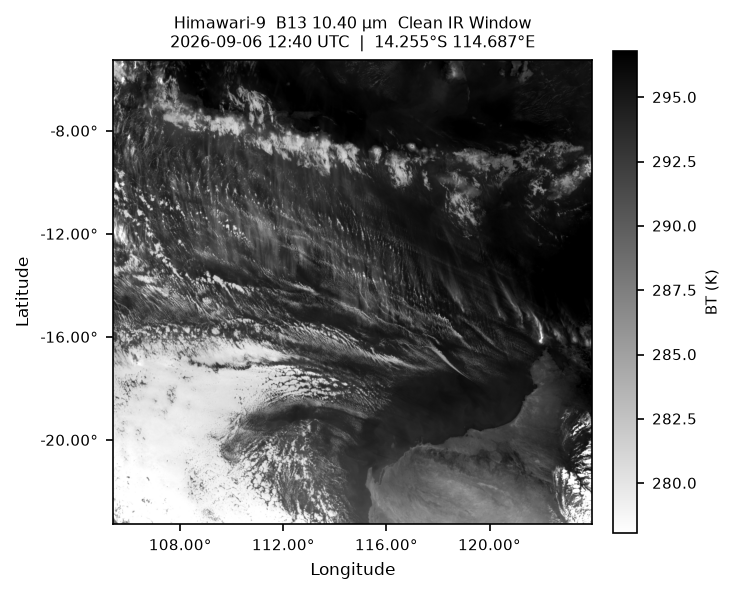
Bali is the closest option, about 500km from the predicted point, and there’s no shortage of Aussies over there we could rope in. But low cloud is going to kill any chance of a photo from there.
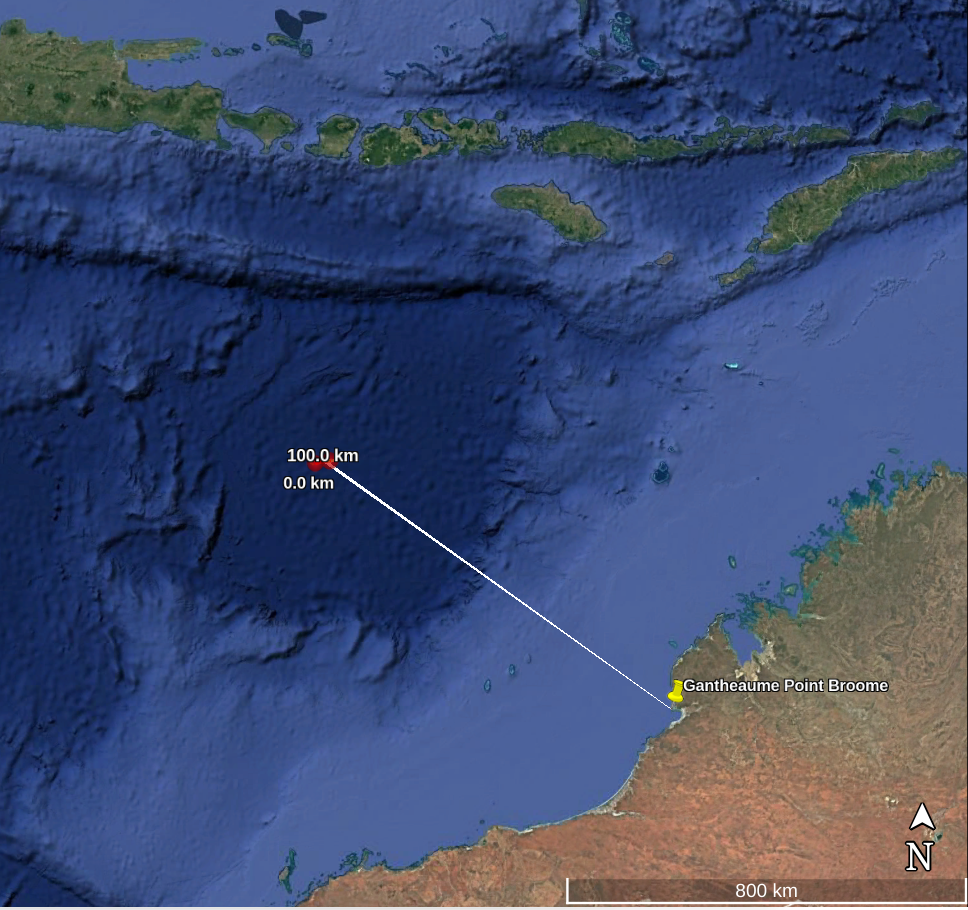
The North-West coast of WA is clear though. Broome is 780km away, which is starting to defy the horizon equation, but we’ve picked up superbolides at that range before with the DFN network. It’s a long shot, but the only clear-sky shot we’ve got.
Ellie starts trawling the local Broome Facebook groups, and gets chatting to Richard Young, who’s got the gear, is in the right place, and is keen to give it a go.
The Confirmation
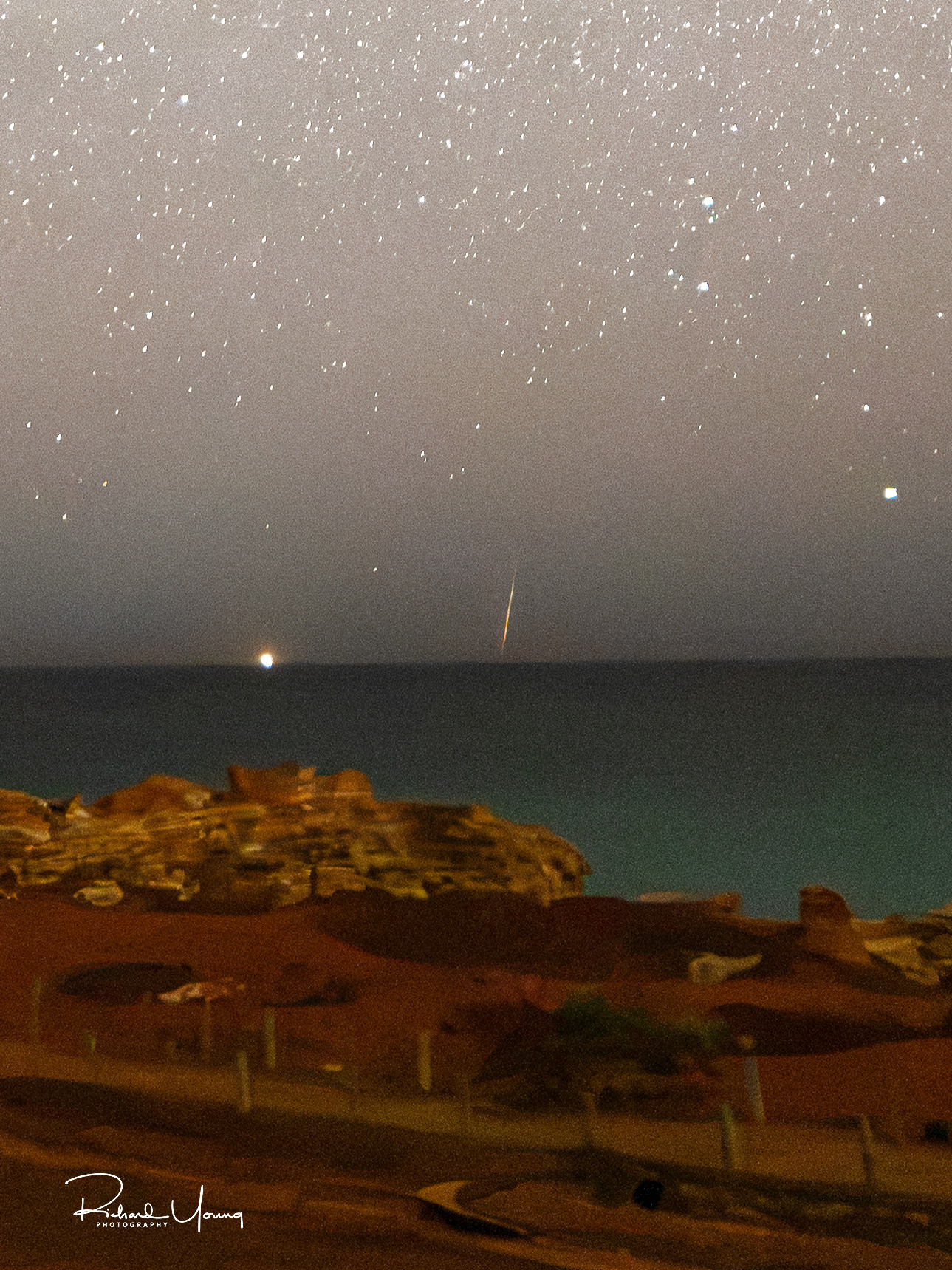
Late that Sunday night, Ellie talks Richard through where to point. North-West horizon, super low, right down near where the sea meets the sky. Richard aims the camera, sets the intervalometer going: one long exposure every 15 seconds, and waits.
He later reports a promising fireball, albeit not as bright as what he was expecting. We talk on the phone. I’m looking at the shot, and I’m thinking, it’s got to be it. At this point I am nearly certain.
Then the problem shows up: the fireball in that frame is 20 minutes too late. And when I do some rough astrometry on it, it’s also 45 degrees off in azimuth from where 2026 RW1 should have come down. I can almost not believe it.
Later Richard takes a closer look at the sequence. And there it is: a much fainter fireball, at the correct time.
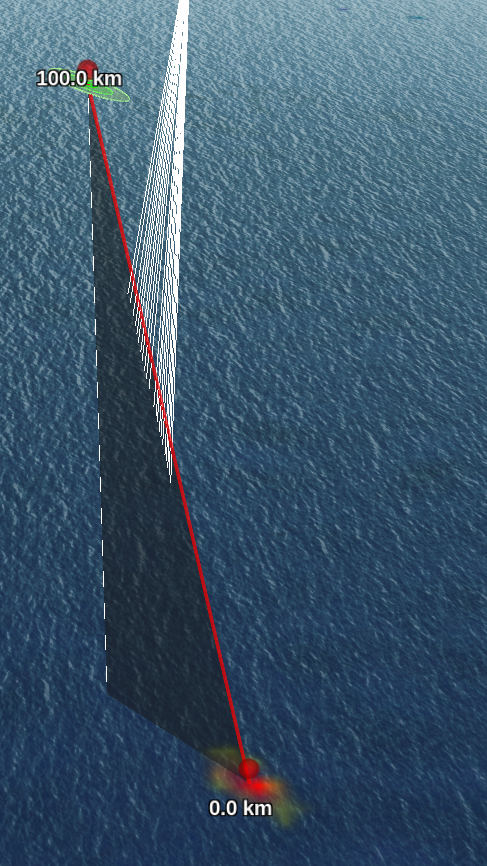
I do the astrometry properly. A degree above the horizon doesn’t scare me, we’ve found meteorites that way before. The trajectory lines up perfectly with JPL Scout’s predicted impact corridor.
This is our one!